 Foxe
Foxe 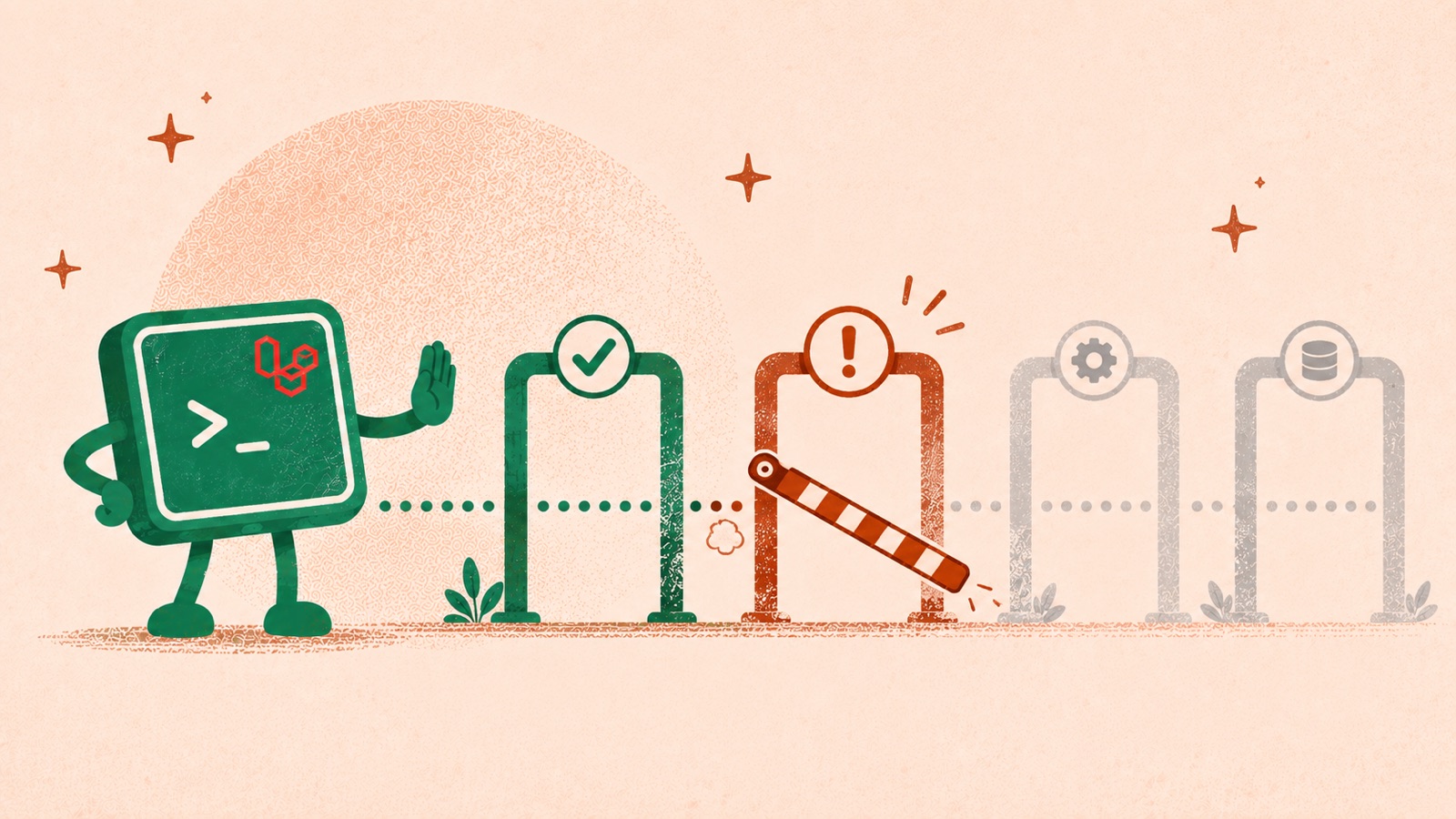
Laravel ships with a deep set of validation rules, and most of the time they’re all you need. But the docs don’t surface everything — now and then the feature you want is sitting right there in the source, just undocumented. This is the story of one of those, and how it ended up in the framework.
The bug my tests didn’t catch
I had a user_id field with what looked like sensible rules: it had to be
present, an integer, and unique in the users table.
$this->validate($request, [
    'user_id' => 'required|integer|unique:users,user_id',
]);
It worked in my own testing. Then QA typed letters into the field and got a database error instead of a clean validation message.
Here’s why. By default Laravel runs every rule on an attribute and collects all
the failures. So with a non-integer value, required passed, integer failed —
and unique still ran anyway, firing a SELECT against a column the schema only
allows integers in. The query blew up before validation could return a tidy
message. My first instinct was a custom rule to work around it.
The one-word fix
What I actually wanted was for validation to stop at the first failure on that
attribute, so a broken value never reaches the unique query. At the time the
clean way to do that wasn’t in the documentation — so I built it and opened a pull
request against Laravel. It was
merged, and shipped in Laravel 5.2 as the bail rule:
$this->validate($request, [
    'user_id' => 'bail|required|integer|unique:users,user_id',
]);
With bail first, the moment required or integer fails, Laravel stops and
never runs unique — no stray query, no database error. Two things to remember:
- Order matters. Rules run top to bottom, so put the cheap, structural checks
(
required,integer) before the ones that hit the database (unique,exists). bailis per-attribute. It only short-circuits the field it’s on; other fields still validate normally.
Still true today
Ten years on, bail is still the idiomatic answer, and it reads even better with
the array syntax most Laravel code uses now:
use Illuminate\Validation\Rule;

$request->validate([
    'user_id' => ['bail', 'required', 'integer', Rule::unique('users', 'user_id')],
]);
That’s the whole trick — one small rule that turns a leaky “run everything” pass into a clean “stop when it breaks” one. It’s also a nice reminder that the frameworks we lean on every day are just code, and open enough to fix when they come up short.
Love Laravel. Keep coding.
— JJ
Frequently asked questions
- How do I stop Laravel validation on the first failure?
- Add the bail rule first in the field's rule list, e.g. 'bail|required|integer|unique:users'. Laravel then stops running that field's remaining rules the moment one of them fails.
- Is Laravel's bail rule per-field or global?
- bail is per-attribute. It only short-circuits the field it is placed on; every other field still runs all of its own rules normally.
- Why does rule order matter when using bail?
- Rules run top to bottom, so place cheap structural checks (required, integer) before expensive ones that hit the database (unique, exists). That way a broken value fails early and never reaches the database query.
- When was the bail rule added to Laravel?
- The bail rule was merged into the framework and shipped in Laravel 5.2, and it is still the idiomatic way to stop on the first failure today.